
History of Headphones


 History of Headphones

     Nathaniel Baldwin was a creator of today’s modern headset taken by an in 1910. The predecessor to modern headphones, his invention benefited from having the speakers placed over the ear, blocking out background noises and enhancing the sound from speakers. The modern headsets were John C. Koss and Martin Lange, again from America. They developed the world’s first stereo headphones driven by a passion for music and great sound releasing the Koss SP3 stereo headphones in 1953. 

    These early models lacked padding and were often uncomfortable to wear for long periods. Their impedance varied; headphones used in telegraph and telephone work had an impedance of 75 ohms. Those used with early wireless radio had more turns of finer wire to increase sensitivity. The impedance of 1000 to 2000 ohms was common, which suited both crystal sets and triode receivers. Some very sensitive headphones, such as those manufactured by Brandes around 1919, were commonly used for early radio work.

    Astronaut “Wally” Schirra was considered to be influential in the creation of these headset systems and wore the first Plantronics headset into outer space in 1962. By 1969 Neil Armstrong’s famous words came over another Plantronics headset. What a long way technology, man and headsets had come in just 59 years but there were further obstacles in place before headsets could reach levels of popularity, technology and affordability found in their modern counterparts. 
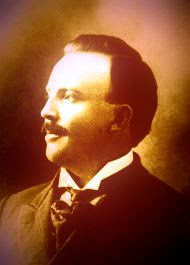
Nathaniel Baldwin

    In early powered radios, the headphone was part of the vacuum tube's plate circuit and carried dangerous voltages. It was normally connected directly to the positive high voltage battery terminal, and the other battery terminal was securely grounded. The use of bare electrical connections meant that users could be shocked if they touched the bare headphone connections while adjusting an uncomfortable headset.

    In 1995 Apogee Software released Rise of the Triad, a game which for the first time ever allowed players to challenge each other over a network. Despite sceptics, the popularity of the internet and online gaming grew, eventually leading four people to have one discussion around a game of poker in 1997 which would lead to the world’s first gaming headset.

 https://coolmaterial.com/roundup/history-of-headphones/

        From the above link, we can isolate the year by year inventions of the headphones and their models.


Comments

Popular posts from this blog

History of Languages

History of Languages It seems that academics and professionals are still not entirely sure of how old language is, but general consensus us that it has been with us since around 100 000 BC. As a result of this disagreement, it is even harder to accept which is the oldest surviving language. That is, one that is still in use in our modern world. Currently, about 7,000 languages are spoken around the world. They belong to different language families and their origins date back thousands of years ago. Researchers are still finding it difficult to determine which language is the oldest. However, the earliest written languages on record are the cuneiform script that was discovered in Mesopotamia that dates back to 8th millennium BC. The Sumerian script that started in the 3rd millennium BC was developed for funerary inscriptions because the Sumerians were concerned about their afterlife. Early History For centuries, humans have wondered about the origins of language and yet nobody is ...

History of Chemistry

    History of Chemistry         Chemistry is a branch of science that has been around for a long time. In fact, chemistry is known to date back to as far as the prehistoric times. Due to the amount of time chemistry takes up on the timeline, the science is split into four general chronological categories. The four categories are: prehistoric times - beginning of the Christian era (black magic), beginning of the Christian era - end of 17th century (alchemy), end of 17th century - mid 19th century (traditional chemistry) and mid 19th century - present (modern chemistry).                                             The history of chemistry represents a time span from ancient history to the present. By 1000 BC, civilizations used technologies that would eventually form the basis of the various branches of chemistry. Examples include extractin...

History of Photography and the Camera

History of Photography and the Camera:      The basic concept of photography has been around since about the 5th century B.C.E. It wasn't until an Iraqi scientist developed something called the camera obscura in the 11th century that the art was born.      Even then, the camera did not actually record images, it simply projected them onto another surface. The images were also upside-down, though they could be traced to create accurate drawings of real objects such as buildings.      The first camera obscura used a pinhole in a tent to project an image from outside the tent into the darkened area. It was not until the 17th century that the camera obscura became small enough to be portable. Basic lenses to focus the light were also introduced around this time.           During the 1800s, Britain and France were neck and neck in the race to get early photographic technology off the ground. The French initially pippe...